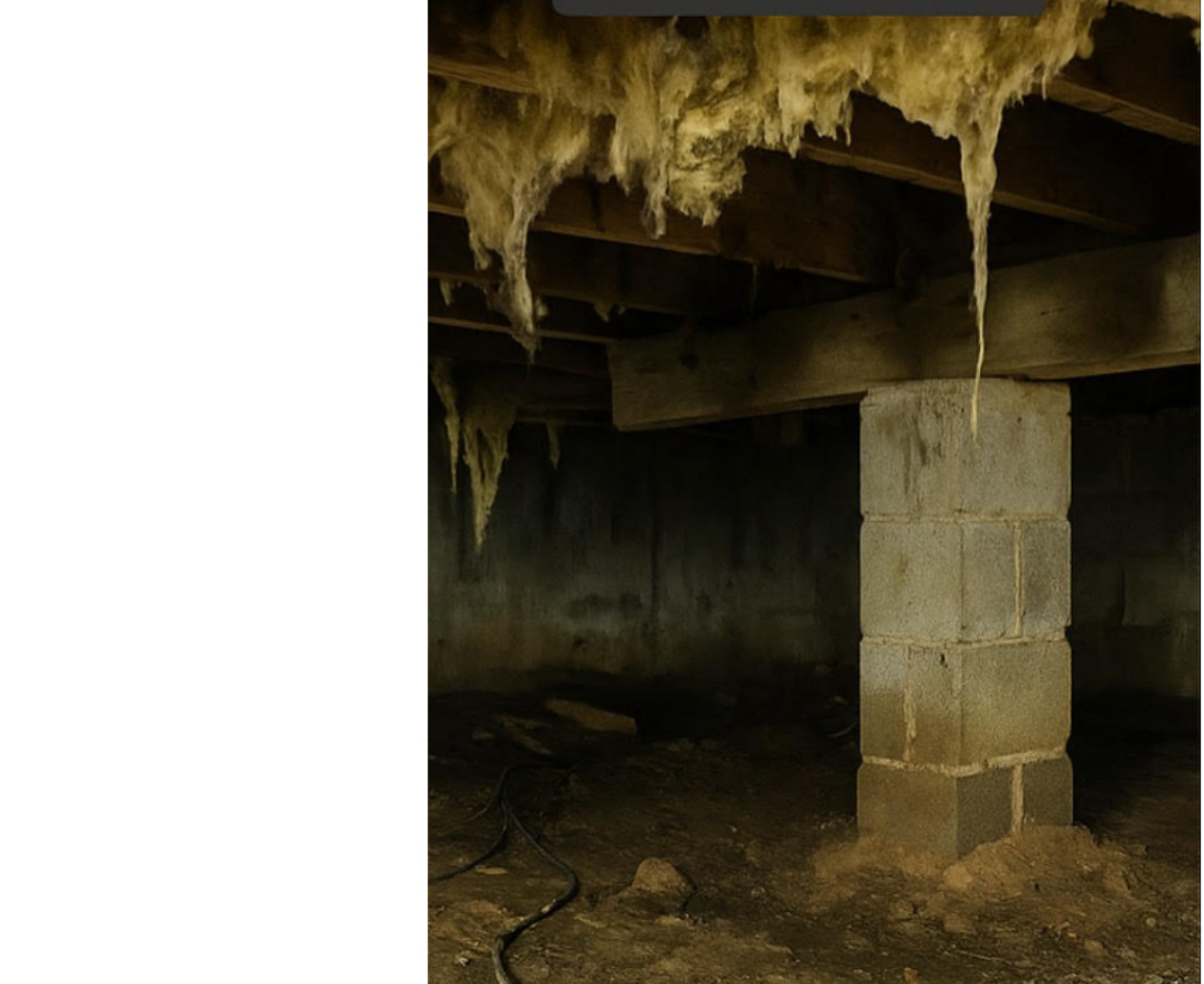
Have you noticed wet, sagging, falling, insulation in your crawlspace? Wet fiberglass insulation in a crawl space isn’t insulating anything — it’s just a hanging sponge full of mold spores.

Crawlspace insulation is designed to help regulate temperature and improve energy efficiency throughout the home. When insulation becomes exposed to excessive moisture, it can absorb water, sag, deteriorate, and lose much of its insulating value.
Many homeowners first notice insulation hanging from the floor joists, discoloration, damp materials, or musty odors coming from the crawlspace. Wet insulation is often a symptom of a larger moisture problem that should be properly evaluated and corrected.
Elevated humidity levels within a crawlspace can allow insulation to absorb moisture from the surrounding air over time.
Moisture rising from exposed soil can accumulate within the crawlspace and affect insulation materials throughout the space.
Groundwater entering the crawlspace can saturate insulation and create ongoing moisture problems.
Leaking pipes or plumbing components can introduce moisture directly into insulation and surrounding building materials.
Without a properly functioning vapor barrier, moisture from the ground can continuously enter the crawlspace and affect insulation performance.
Successfully addressing wet crawlspace insulation requires correcting the underlying moisture issue before replacing damaged materials. Depending on the source of the problem, a combination of waterproofing, moisture control, and crawlspace repair solutions may be recommended.
Letting wet insulation hang there is just paying to make things worse:
Honest assessment. Written estimate. Lifetime warranty on every install.